Home · Craft

The Craft

Six operations,
all done by hand

Most mattresses are glued, compressed and closed by machine. Ours are built the way European beds were built for two hundred years — because that is the only way horsehair, wool and calico pockets behave the way they should.

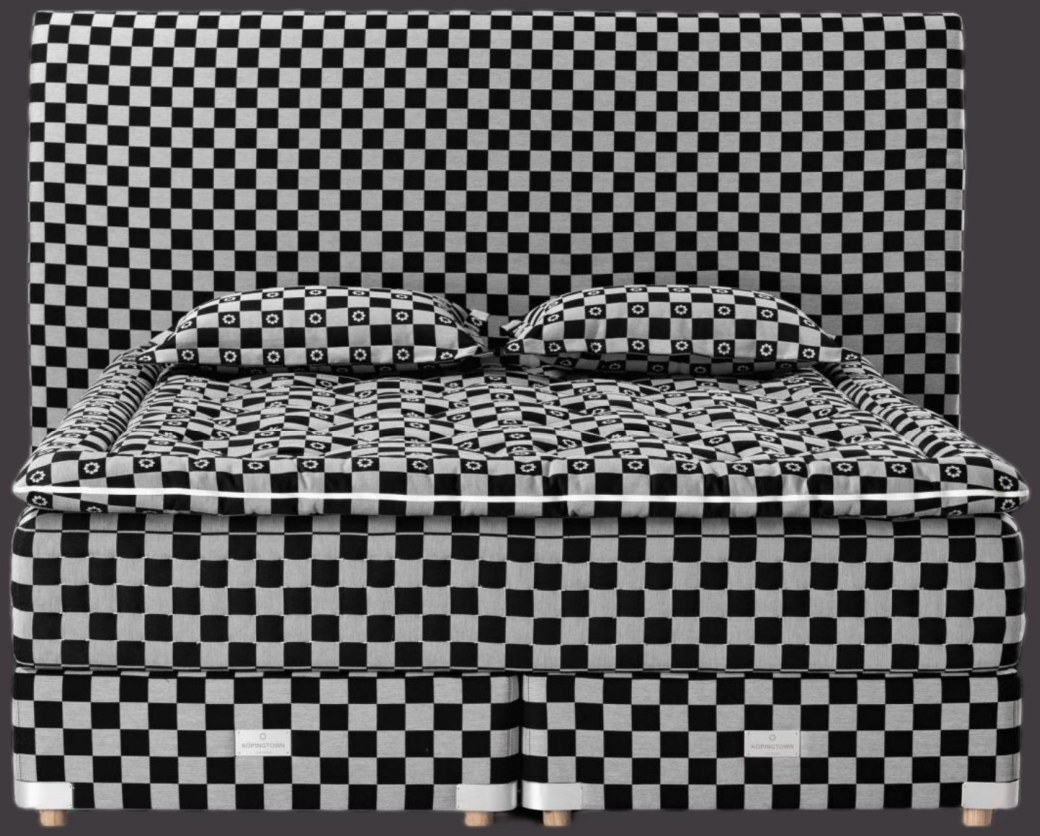
Stardust handcrafted mattress with tall buttoned headboard in black-and-white check fabric
01 · Springs

Calico pockets, sewn one by one

Every spring is wrapped in its own calico fabric pocket and the pockets are sewn together into a unit — full-depth units for single-tier beds, nested arrays for two-tier cores. Fabric, not glue, holds each spring in place.
02 · Fills

Horsehair, teased by hand

18–21 cm tail hair is washed, then teased open by hand until it is an even, springy web. Teased hair traps air, keeps the bed cool and returns to shape for decades. It is the most labour-intensive layer we use — and the reason our beds keep their feel.

03 · Layers

Built from both faces

Wool–cotton blends, pure cotton, soy and high-loft fibres and jute felt are laid symmetrically from the top and the bottom towards the spring unit, so the mattress wears and supports evenly.

04 · Tufting

Hand through-tufting

Wool or cotton buttons are pulled clean through the whole build and tied by hand — in diamond or square lattices depending on the model. Tufting is what keeps a 30 cm mattress at 30 cm for years.

05 · Side walls

Two rows of side-stitching

Side walls are stitched to the spring unit by hand, two rows, 10 cm apart. Run a finger along the border of the bed: that ridge of stitches is the line a machine cannot imitate.

06 · Identity

Labels & traceability

Every finished bed carries permanent model identification and batch traceability, plus the compliance labelling required by its destination market.

Inside the workshop

Photographed on our own floor

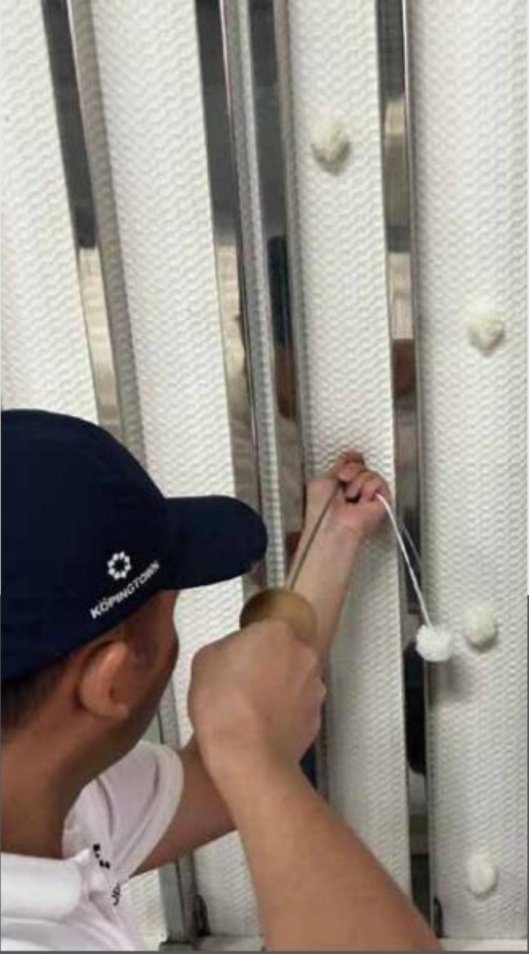
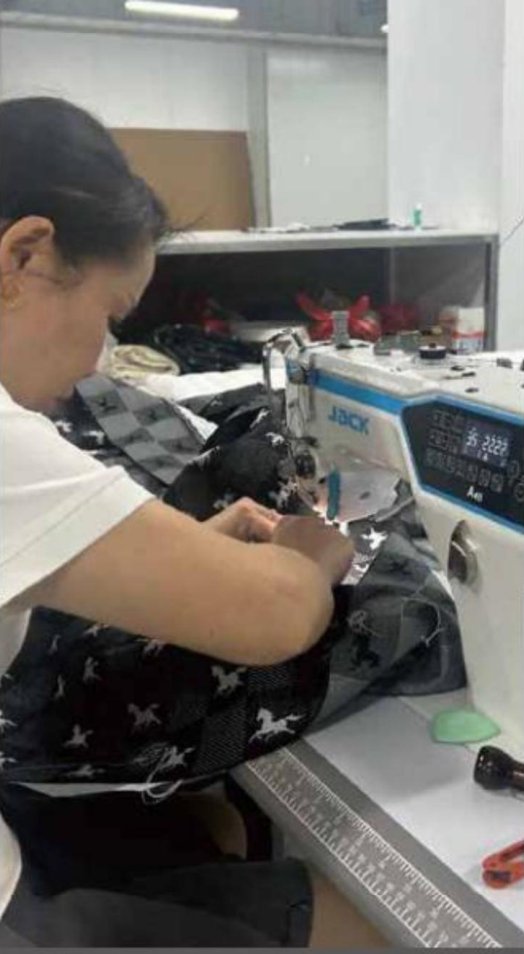
Every bed passes through the hands of the artisans who build it. These photographs are taken on our production floor — not staged, not stock.

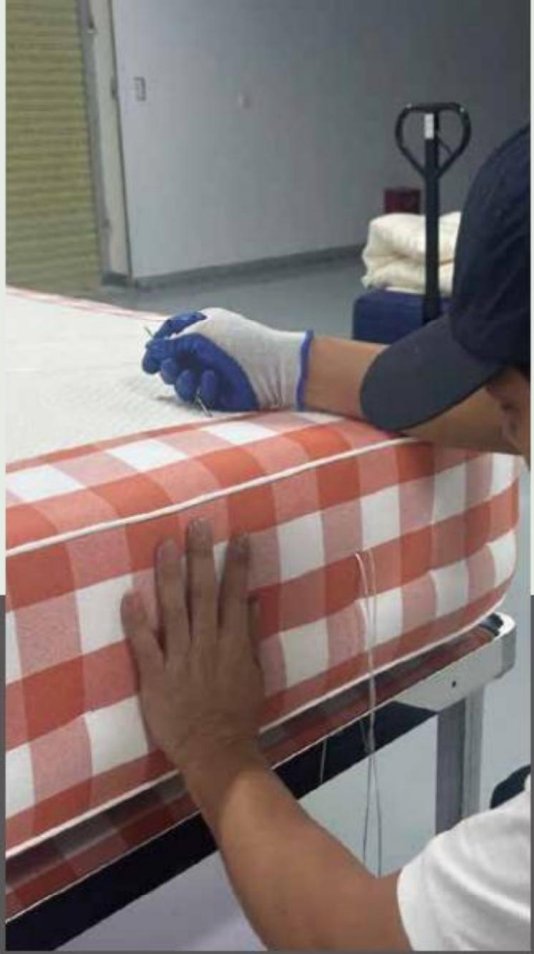
Artisan hand-pressing the checkered side wall of a mattress
Side walls smoothed and set by hand
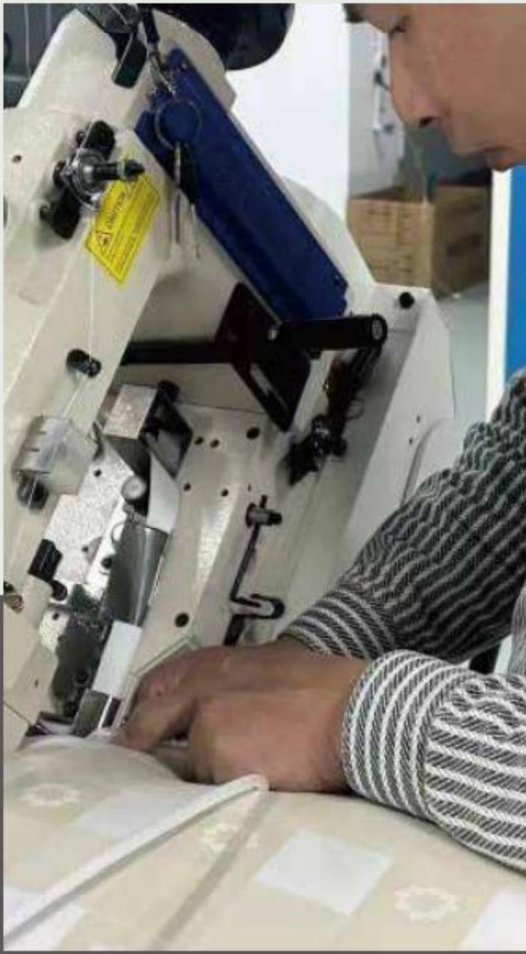
Worker sewing the quilted border tape on a hand-built mattress
Border tape sewn in a continuous run
Artisan pulling a tufting needle through the mattress by hand
Tufts pulled clean through, tied by hand
Artisan sewing the model label onto a finished mattress cover
Model identification sewn on every bed
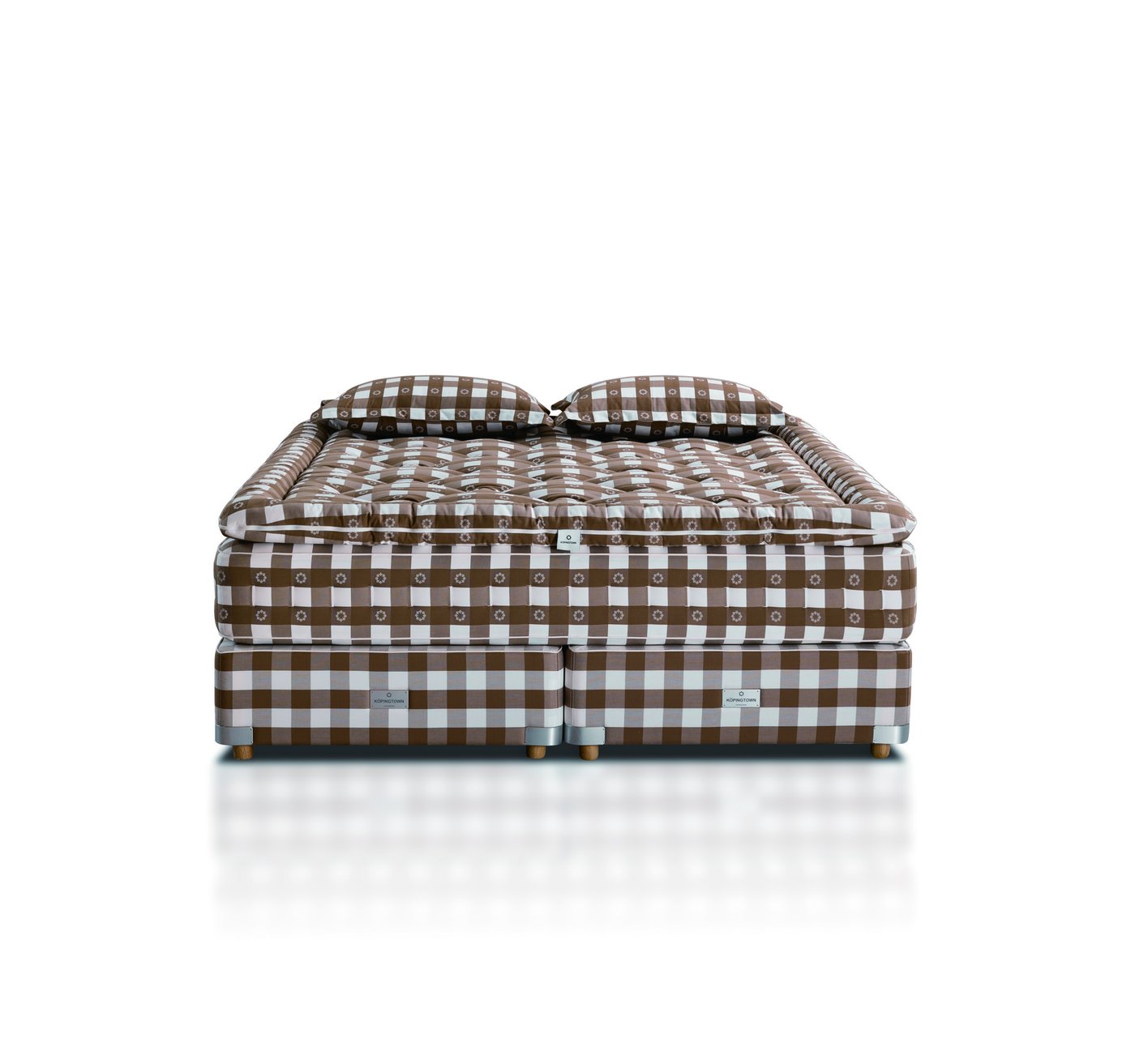
Two-tier construction

A top mattress that lifts off

Flagship models pair an 8–12 cm hand-tufted top mattress with a 28–30 cm core. The top mattress can be refreshed, aired or replaced independently — and the two layers breathe separately, which keeps the sleeping surface drier.

Why nested mini-springs? Small-diameter "bread-loaf" spring units sit between the core and the top mattress, adding point elasticity before the main calico unit takes the load.

Two-tier handcrafted mattress with removable top mattress
Next

See what goes inside

Every fill we use is named, sourced and documented — nothing is hidden behind the word "foam".

The material library